
LiveLab
Company
Carnegie Learning
Role
Lead UX and UI Designer
Year
2019

OVerview
At Carnegie Learning, I served as Lead UX and UI Designer on LiveLab, a real-time analytics and instructional support platform built as a companion to MATHia. The product was designed to give educators immediate, actionable insight into student progress during live classroom sessions.
The work focused on translating complex learning data into interfaces that could be understood quickly and used effectively under real-world classroom constraints.
The Challenge
The challenge was translating complex learning data into real-time insights that supported fast, in-the-moment instructional decisions during live classroom sessions.
Educators using existing tools lacked visibility into what students were working on during lab time and which students needed support. Common challenges included:
-
Limited time to interpret data during live instruction
-
Difficulty identifying struggling students at a glance
-
Low student help-seeking behavior
-
Interfaces that surfaced data without clear guidance for action
The platform needed to support fast decision-making and human interaction, not deep analysis or reporting.
My role
As Lead UX and UI Designer, I was responsible for:
-
Defining the overall interaction model and experience strategy
-
Designing end-to-end workflows for monitoring and responding to student progress
-
Translating dense performance data into clear, scannable patterns
-
Leading wireframing, prototyping, and iterative usability testing
-
Collaborating closely with product, engineering, and research teams
Approach & Focus
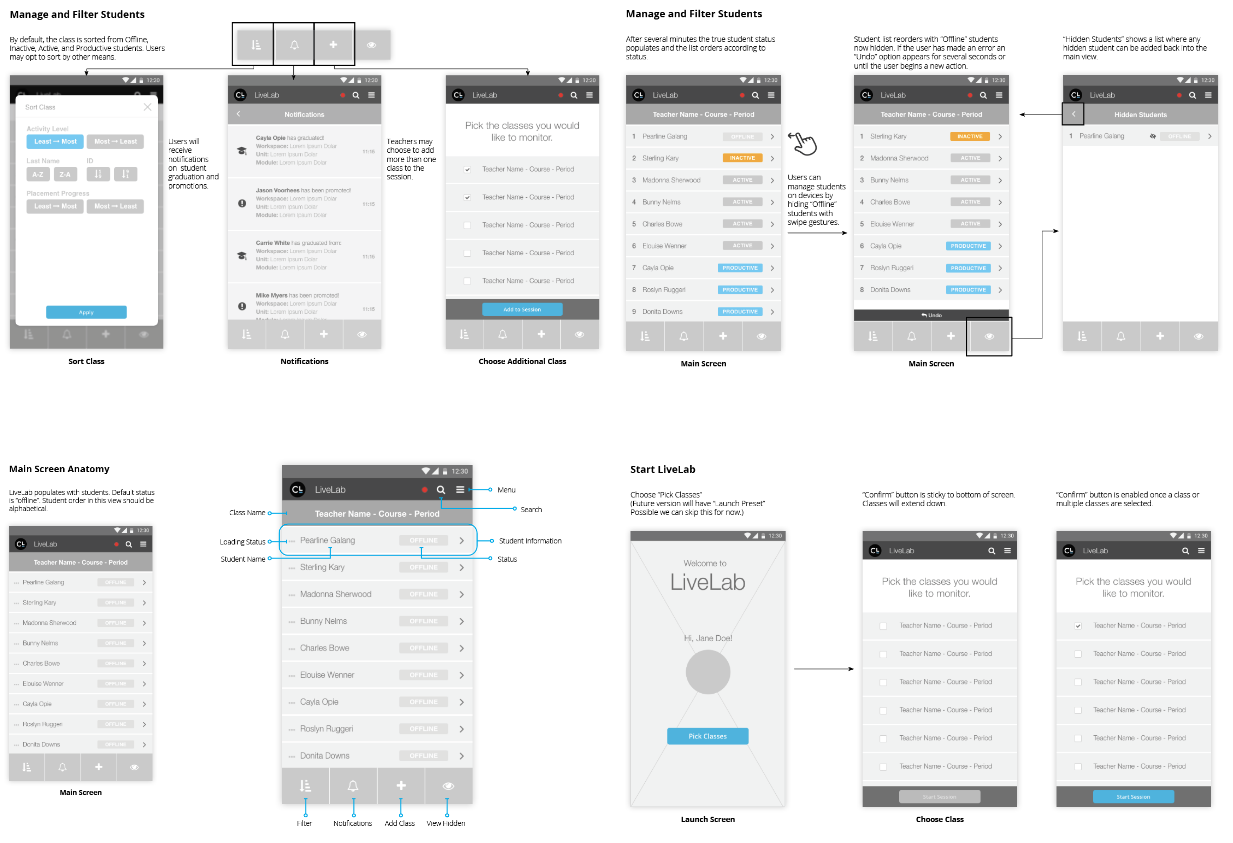
Interviews, classroom observations, and workflow walkthroughs revealed that existing tools surfaced learning data without aligning to how educators actually intervened during live instruction. Teachers could see performance metrics, but struggled to quickly understand which students needed attention, why they were struggling, or what action would be most effective in the moment. Early design exploration focused on clarifying intent and hierarchy—prioritizing immediacy and interpretability over completeness—before refining interfaces for live classroom use.
Key Design Priorities
Systems-oriented design: I focused on how LiveLab fit into the broader product ecosystem and classroom workflow, ensuring designs supported quick transitions between observation and action.
Actionable insight: Interfaces prioritized surfacing who needed attention and why, rather than overwhelming users with raw metrics.
Usability under pressure: Designs were optimized for rapid comprehension, recognizing that educators often had only moments to engage with the tool.
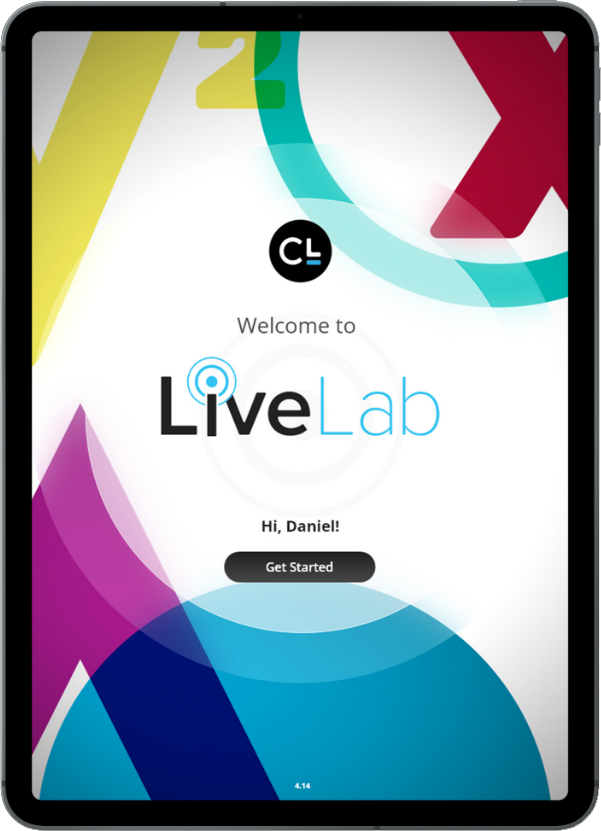
LiveLab surfaced real-time signals about student status and progress in a glanceable interface designed for quick instructional action.
Tools & Methods
-
Adobe XD
-
Miro
-
User interviews and surveys
-
Personas and field studies
-
Wireframes and interactive prototypes
-
Usability and user acceptance testing
Outcomes
- Significant lift in student performance following the beta release of LiveLab
- Increased instructor engagement during lab sessions, driven by clearer visibility into student progress
- Research showed that brief, timely check-ins—enabled by LiveLab’s insights—had a measurable impact on student completion and engagement
- LiveLab became the most well-received product in Carnegie Learning’s history
- Awarded Breakthrough Ed Tech Award for Best Use of AI
%
Reported using LiveLab 75%+ of their lab sessions
%
Reported that LiveLab influenced or changed how they facilitate MATHia lab sessions.
%
Reported using MATHia more often with students now that they have LiveLab.
Lessons Learned
Post-launch insights revealed that some of the most meaningful impact came from relatively simple interactions. We found that brief, timely encouragement from educators was often a stronger driver of student progress and task completion than more complex instructional interventions. Designing for visibility and opportunity to engage proved just as important as the data itself.
We also learned that LiveLab was used differently than initially anticipated. While the experience was designed mobile-first for individual teacher use, many educators chose to project the interface in the classroom, treating it more like a shared status board. This behavior prompted follow-on design considerations, including support for anonymous display modes using student IDs, allowing teachers to leverage collective motivation without singling out individual students.